ServicesSolar Panel Installation
Solar Panel Installation in South Salt Lake
Your new solar array is planned around your power bills and the sunniest spot on your property. Before any work begins, you get a written breakdown of the equipment, the layout and every cost, so the number you agree to is the number you pay.
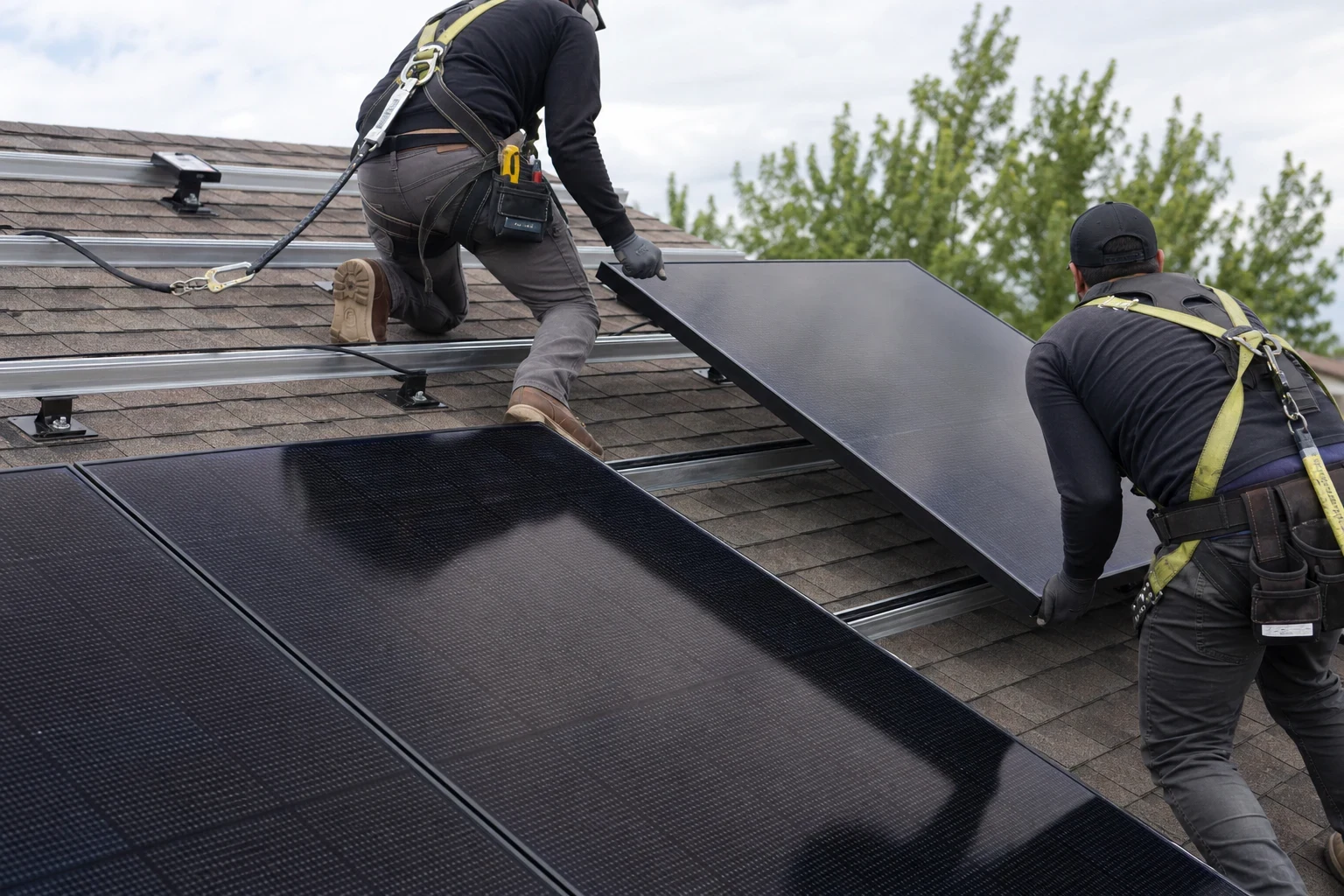
What solar installation covers, and when it makes sense
Solar tends to pay off when your home uses a steady amount of power through the year, you have open space with good sun, and you plan to stay long enough for the savings to add up. Running the air conditioner through hot Salt Lake Valley summers is often what pushes a bill high enough to make the numbers work.
We start with your last twelve months of usage, not a guess. From there we size a system to cover what you actually use, show you the expected production and put it all in writing. If solar is a poor fit for your home, we will tell you so instead of selling you panels.
We are licensed in all states served. You also get a 25-year warranty on all solar and battery products that go into your system.
What's included in your installation
- Usage review and system sizing
- We read your utility bills and size the array to your real consumption. You see the panel count, the expected yearly production and how much of your bill it should offset.
- Site layout and mounting plan
- We walk your property to find the spot with the best sun and the least shade from trees and nearby buildings. The plan shows where the array sits, how the racking is anchored and the path the wiring takes to your electrical panel.
- Permits and utility paperwork
- We prepare and file the building permit and the interconnection application with your utility. The technical forms and the follow-up stay on our desk, and if a question comes up, we call you.
- Panels, inverters and wiring
- We install the panels, inverter or microinverters, disconnects and conduit to current electrical code. Exposed runs are sealed and fastened so they hold up through freeze and thaw.
- Inspection and turn-on
- We meet the inspector and take care of anything they flag. The system is switched on only after the utility gives permission to operate.
- Monitoring setup
- Before we leave, we connect the monitoring app and show you how to read daily production on your phone.
Signs solar could be right for your home
Summer bills that spike
If your bill jumps every July and August when the air conditioner runs, solar production peaks at the same time and can take the edge off.
Open, sunny space
A yard or side lot facing south or west, with little shade from mid-morning to late afternoon, gives panels room to work.
Plans to stay put
Solar savings pile up a little each month. If you expect to be in your home for years, you keep collecting them long after the system has paid its way.
A new electric car or heat pump
New electric loads raise your usage. Sizing for them now usually costs less than adding panels later, and our Solar System Add-Ons page covers expansions.
Tired of rising rates
Producing your own power gives you more say over a part of the monthly budget that keeps creeping up.
How your installation goes, step by step
- 1
Free solar savings analysis
Over the phone or in a free virtual appointment, we review your bills and your property and estimate what solar could save you. There is no pressure to decide on that call.
- 2
A written quote you can read
You get a line-item breakdown listing the equipment, system size, permit fees, labor and any electrical upgrades. If something could change the price, such as a main panel upgrade, it is named on paper up front.
- 3
Permits and approvals
Once you sign, we file with the city and the utility. Approval times vary, and we keep you posted as each one comes back.
- 4
Install days
The crew sets the racking, mounts the panels and runs conduit, cleaning up the work area at the end of each day. Your power is off only briefly while we tie into the panel, and we tell you ahead of time when that will be.
- 5
Sign-off and first power
After the final inspection passes and your utility gives the go-ahead to connect, we switch the system on. Then we open the monitoring app with you so you know what a normal production day looks like.
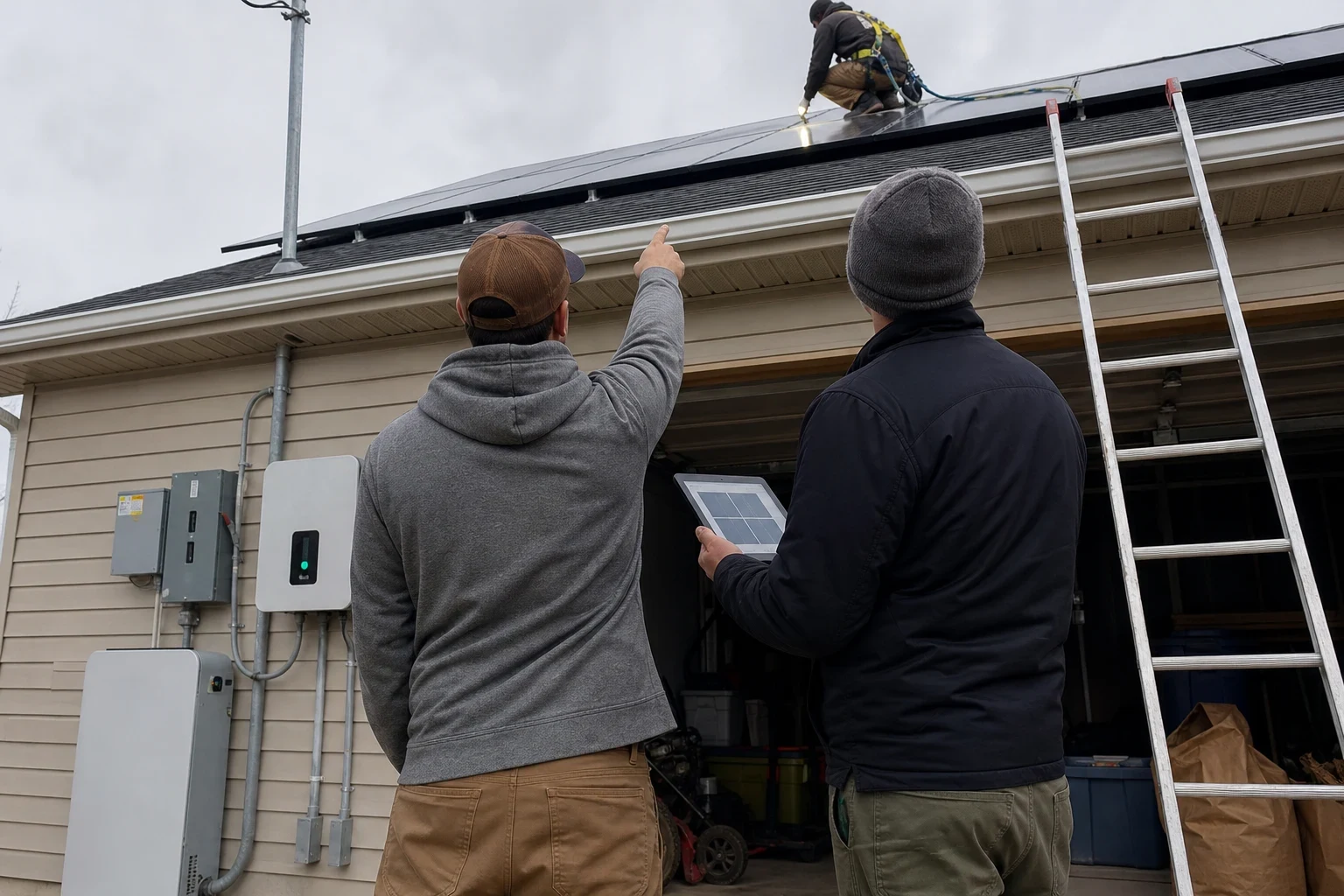
What affects the cost of solar panel installation
Every home is different, so we price each system from your own numbers and put every line in writing. We also offer $0 up front, so you can start producing power without a large payment on day one. These are the things that move the total.
- System size
- More panels cost more, and the right size depends on your yearly usage. We match the array to what your home really draws rather than padding it with extra panels.
- Equipment choices
- Higher-efficiency panels, microinverters versus a single string inverter, and adding a battery each shift the total. Your estimate sets the options next to each other so you can compare, and our Battery Storage page explains what a battery adds.
- Distance to your electrical panel
- The farther the array sits from your panel, the more conduit and trenching it takes. Rocky or compacted soil can add labor too.
- Electrical panel condition
- Older homes sometimes need a main panel upgrade to handle solar safely. We check this during the analysis and include it in writing if it is needed.
- Permit and utility fees
- Permit and interconnection fees are set by the city and the utility. We show them as their own line items so nothing is buried.
Solar panel installation questions
Something not covered here? (801) 396-7261
Will the price change after I sign?
Not for anything we could have seen beforehand. Your written quote covers the equipment, labor, permits and any electrical work we identified. If an inspector requires something nobody could have predicted, we explain it and get your approval in writing before doing the work.
How do the panels handle Utah winters?
Panels keep producing in cold, clear weather, and cool temperatures actually help them run efficiently. Snow on tilted panels slides off as it melts, and production picks back up once the sun clears it. Winter output is lower because the days are shorter, and we build that into your yearly estimate.
How long is my solar equipment covered?
Your panels, inverters and any battery fall under our 25-year warranty on all solar and battery products. We walk through what that covers during your call and again before you sign, so nothing about it is a surprise later.
Do I need a battery with my solar panels?
No. A grid-tied system works without one. A battery stores daytime power for evening use and can keep key circuits running during an outage, so it is worth considering if that matters to you.
Can I go solar without paying up front?
Yes, we offer $0 up front. We explain how it works and what you will pay over time when we talk, and every detail appears in writing before you commit.
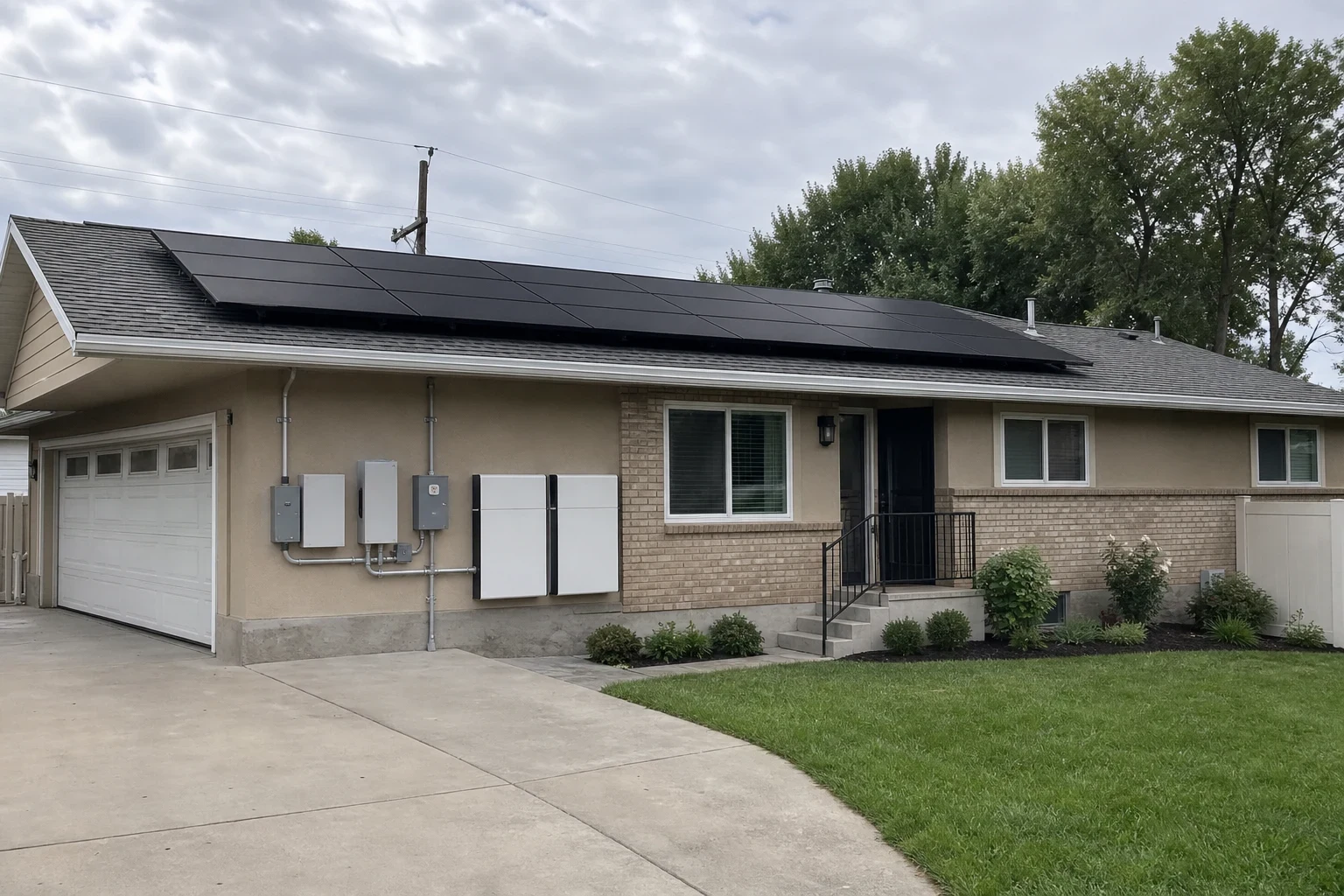
See what solar could save your home
Tell us about your power bills and your property, and we will lay out your numbers in writing before you decide anything. Earn $1,000 for every referral that goes solar, too. The first step is a relaxed conversation with no obligation.